The Growth, Benefits, and Future of IoT in AGTECH (Agriculture Tech)

Agriculture Technology

Agricultural Technology has become the most revolutionary and impactful area of modern technology, because of the fundamental need to produce enough nutritional food to nourish a growing global population. With advancements in technology and IoT, modern farms and agricultural operations work incredibility different from past practices. Sensor devices, automated machines, and information technology have taken over the agriculture sector.  

The global population will reach over 10 billion by 2050. To fulfill the need of 10 billion people, we need to work hard and smart. We need to double the amount of food we now produce. The latest Agriculture Technology covers almost every aspect from powered machinery (formerly performed by people and animals), to enhanced seed production and planting techniques to agrochemicals, which supports crop growth and protects the plants from destructive weeds and insects.

Today’s agriculture regularly uses different technologies, like robots, moisture sensors, aerial images, and GPS technology. With the evolution of Technology and robotic devices, the agriculture industry is becoming more user friendly. Agriculture technology and its robotic systems allow many businesses to increase profits, become efficient, safer, and more environmentally friendly. This advancement in Technology, which connects agriculture with Technology, increases productivity, and reduces human workload.

Climate change is a big challenge. With the development of Technology and to save our natural resources, Agriculture Tech adoption is essential. AGTECH allows farmers to better utilize resources like water and nutrients effectively. Another primary purpose is the enrichment of soil through precision agronomic systems and enhanced seeds, which will produce crops that will be beneficial for human health as well as for the animal husbandry. This will increase the output of meat and produce higher quality products full of proteins like milk and eggs. In short, Agriculture Tech is the new game-changer for the production of more food with less natural resources.  

Use of Technology in Agriculture

There are many usages of Technology in Agriculture. Below we have mentioned some uses of Technology in agriculture.

  • Farm machines

Farm machines lower the cost of labor, harvest in time, plant early, and makes certain that the yield is stored within the right time frame. The use of Technology in agriculture makes sure that the food is grown, harvested and stored within the shortest time possible.  

  • GPS tracking for machines

GPS technology also plays an essential role in the development of autopilot sprayers, & tractors that do not require any driver. Trackers are enabled with the help of IoT Sim Cards. GPS trackers and tracking systems eliminate human errors and save fuel and equipment. Security of the tracking devices can be accomplished with Private IP addresses, coupled with VPN and even private APNs.

  • Crop sensors

What quantities to give to the plant, what fertilizers work best for different plants, when to apply. These are significant challenges faced in agriculture. Crops sensors make it easier for the farmers to adequately supply the fertilizers and pesticides the crops need in the correct quantity. Such technologies give you an overview and sense of how your plants are feeling.  

  • Use of GPS in field documentation

With the help of GPS, it is becoming easier to determine and document the yields from a given farm and record the application rates. The use of GPS is done with the help of an IoT sim card

  • Biotechnology

Genetic engineering and the process of improving the health of the of the given crop at the genetic level continues to evolve. Biotechnology, referred to as genetic engineering, is carried out to increase the resistance to drought, pests and disease of crops worldwide. In short, with biotechnology, farmers can get the idea of whether or not they can plant on areas that were considered dry or deserts. They can also use less pesticides which saves money and is better for the environment. To achieve the goals, farmers must understand the concept of modern farming and the use of Agriculture technology. 

Agriculture Technology and Growth

In this tech era, where the Internet is becoming more and more ubiquitous, the Internet of Things (IoT) has disrupted many industries and the Agriculture Industry in the same regard. 

IoT technology has brought significant change with smart wearable’s, connected devices, automated machines, driverless cars, and much more. Some recent statistics revealed that the global population would reach over 10 billion by 2050. The agriculture industry needs to ramp up production to feed this massive population. In this case, the best way to fulfill this gap between the food and people is the adoption of IoT internet of things. To deal with climate changes, IoT is eradicating and helping us achieve the demand for more food. Amongst the toughest challenges – weather conditions and environmental impact, IoT must be adopted.

 IoT is enabling agriculture to increase agricultural production at a low cost. In the next few years, smart solutions powdered by IoT will improve the agriculture operations. Some recent reports have stated that the IoT device installation will realize a compound annual growth rate of 20% in the agriculture industry. And the number of connected devices (agricultural) will grow from 13 million in 2014 to 225 million by 2024. However, in the less developed regions, the IoT implementations will be a challenging task. Still, OneSimCard M2M for IoT is making it possible to introduce connectivity and using their global cellular networks.


Benefits of Agricultural Technology

Agricultural technology remains a great player in generating revenue and the source of food for people across the globe. In recent years, this sector has faced many changes, adopted many technologies in agriculture, and used different farming approaches.

Below are some of the benefits of Agriculture technologies. This is a glimpse of the importance of modern technology adoption in agriculture.  

  • Modern Technology and Tech machines can reduce the efforts of farmers
  • Less production time
  • Higher productivity of crops
  • Technology is used to supply water to the crops
  • Connected machines can easily sow the seeds without workforce
  • Chemical pest control
  • Less use of water can improve the fertility of the soil
  • Lower prices, along with significant efficiencies
  • Reduce the impact on the environment
  • Ecological impact
  • Safer foods with safer growing conditions 

Future of IoT in AGTECH

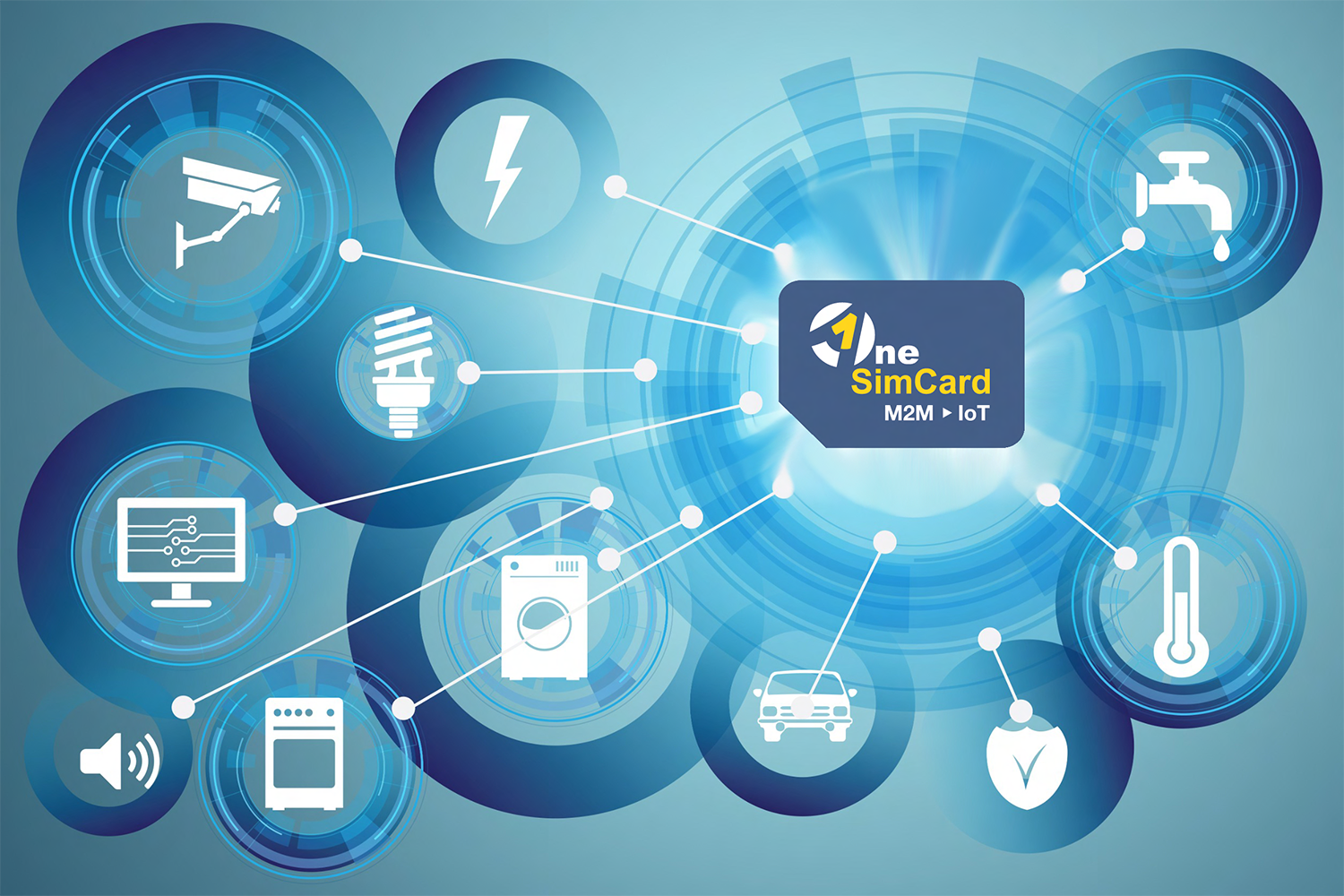
Robotic technologies and remote devices enable more reliable monitoring and management of resources. These technologies rely on using data connectivity. Remote devices consist of embedded SIM cards (eSIM) or traditional plastic SIM cards for IoT/M2M communication. Aside from robotic and remote technologies, management of natural resources plays a big part in saving natural resources such as air and better water quality. There are many growth issues in agriculture technology that are interconnected with security measures. These remote technologies give the farmers better control over plant and animal production, processing, distribution, and storage. 

AGtech Services and OneSimCard M2M and its roaming services are expanding to the Global level to meet people’s demands and deliver sensitive information about device activities or data sharing activities over networks. OneSimCard IoT has a wide portfolio of solutions to ensure reliable, and secure connectivity across the worldwide.  

Agricultural technologies continue to morph, expand and adopt new technology eUICC (Embedded Universal Integrated Circuit Card) Is the next game-changer. Along with eUICC, ICCID (Integrated Circuit Card Identifier) is used in the development of Agriculture technology. With the help of IoT technologies, farmers can now quickly determine what is best for their crops, assess the condition of their plants, better understand impending weather interactions and impacts, and produce a right product at a fast pace. To say that IoT is making strides for the farmers to reach the highest of success is an understatement. One day if might be possible, with a single press of a button, to automate the entire farming process.

Share this article with your friends and family, let them know about the next revolution in the AGTECH.

For a quick start with OneSimCard IoT , check out the IoT SIM Starter Kit.

To a receive a free no-obligation quote for your application click here, or contact us directly via email sales@onesimcard.com or phone +1 617-313-8888.

SIM Card Evolution for IoT Connectivity

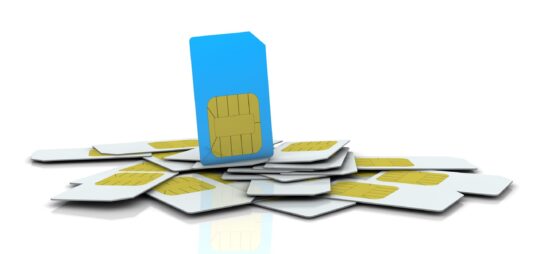
Sim card sizes

For more than 2 decades, mobile devices have been evolving technology around the world. Technology evolution has consistently grown from single profile (IMSI) sim cards to multi-IMSI sim cards. With this emergence, the footprint of the hardware has also reduced from 2FF to MFF2.

The figure above demonstrates, at a glance, the SIM card Gen’s for a better understanding of its footprints.

Deploying eUICC Tech: Is it a Boon?

Because we are in an era where “needs” are being transformed, we are at a stage where everyone is connected with more than 10 end devices in day-to-day life. Thus, connectivity plays an important role where more than 20 billion devices are involved in global roaming as well as domestic deployments.

eUICC deploying practices help in easy provisioning and on-boarding new devices into the existing network. These deployments provide cost-effective connectivity including flexibility from the selection of operators to the profiles in mobile devices. These interoperable features enable startups as well as well-established manufacturers to make advancements in IoT deployments in different real-life use cases like manufacturing, roaming, pricing, platform providers, profile swapping, etc.

The eUICC (A.K.A. eSIM) technology is overall more reliable in for MNO’s (Mobile Network Operators) as well as IoT device manufacturers, and a proven evolution for the rising potentials of their products and strengthens the network connectivity.

From the user’s standpoint, eSim cards are longer-lasting as there is no chance of losing a sim card and far fewer chip demolishing faults. It saves time as there is no required visit to the store to buy or portability switching from one MNO to another. The process of portability becomes easier and quicker.

Provisioning: With the usage of eSim cards, the IoT devices come with built-in support of eSim thus IoT platforms enable the remote provisioning support in its network stack and therefore it becomes simpler and quicker for remote provisioning. This feature helps in communicating with the devices from anywhere in the world through simple steps of switching profiles on the mobile devices.

The amount of real estate required of traditional sim cards is now greatly reduced using minute chips embedding into the mobile devices. The complexities in replacing a sim card is also reduced and replaced by switching profiles directly; no hardware replacement is required. Thus, mechanical failures are reduced tremendously.

Because of these benefits, the OEM’s and MNO’s are embracing eSIM functionality and we are seeing a growing list of devices from wearables to meters to GPS devices utilizing eSIM. We expect to see this list only grow in the future.

eSIM technology enables the interoperability with respect to its profile switching feature or remote provisioning. Its remote accessibility to end devices in a secured, widespread network has decreased the number of challenges, but with these evolutions in the technology, some new-age challenges might become the barriers or the breakdown for the technology adoption.

Potential Pitfalls in Next-Gen Evolution

With newly developed SIM Card technology, there are definitely some challenges to overcome.

The IoT ecosystem is rapidly expanding in its quantity of deployments and has many diversified domains. It is overloaded with data which is shared among billions of devices. Device manufacturers must increase the SIM hardware reliability since the minute chip is, for all practical purposes, impossible to remove, while playing a critical role in network connectivity.

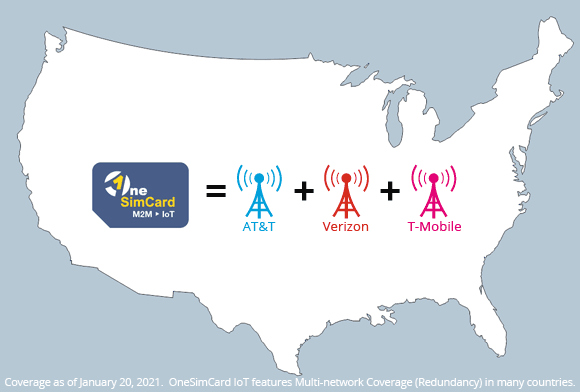
Although in theory with eSIM sounds like it would be simple to switch MNO’s as mentioned above, there are a series of steps that are required for this to happen, and some MNO’s are resisting eSIM. As an example of this resistance, there was a widely reported investigation by the Department of Justice in the USA that looked into possible collusion between the 2 largest carriers AT&T and Verizon and their resistance to eSIM tech in the consumer handset space. Therefore, there are complications when it comes to the practical vs. the theoretical benefits of switching providers.

Another impediment to eSIM adoption is the cost and availability of devices using this standard. While the eSIM itself is more reliable than a standard SIM, the cost per SIM is still slightly more expensive than the traditional SIM. In a very cost-conscience environment, this difference may be too severe to justify adoption. The selection of devices available with eSIM is also not as robust as those which rely on traditional SIM form factors. One solution we are seeing some OEMs move forward with is a hybrid IoT device with both traditional SIM and eSIM availability

Finally, Technology Consortiums must standardize the formats and technological implementations for bringing this technology forward and getting IoT OEM’s, and MNO’s on the same page.

OneSimCard M2M works with many leading GPS and Telematics providers all over the world. Our international mobile cellular connectivity solutions enable fleet software and hardware solutions companies quickly scale by providing a single portal, a single APN for all of their devices, and multi-IMSI SIM cards, including eUICC capability, with access to multiple networks in most countries. If you are curious about our solution and would like to learn more, please contact us at sales@onesimcard.com or call us at +1 617-313-8888.