Securing IoT SIM Deployments: IMEI Locking, Private APNs, and Fraud Prevention

Securing IoT SIM Deployments: IMEI Locking, Private APNs, and Fraud Prevention

An IoT deployment is only as secure as its weakest connection—and for cellular devices, that connection runs through the SIM. A SIM is a credential. Left unprotected, it can be removed and reused, hijacked to run up data charges, or used as a doorway into systems it was never meant to reach. The good news is that securing SIMs doesn’t require exotic tools. It requires a handful of well-understood controls, applied deliberately.

Here are the core defenses every IoT deployment should consider—what they do, when they matter, and how they fit together into a layered defense.

Why IoT SIMs Are a Target

Consumer phones get swapped, upgraded, and watched over constantly. IoT devices are the opposite: they’re deployed by the thousands, left unattended for years, and often sit in physically accessible places—a parking lot, a utility pole, a vending machine, a shipping container. That combination of accessibility and non-attended makes them attractive.

The threats are concrete. A stolen SIM can be dropped into a phone or modem to get free connectivity on your account. A compromised or malfunctioning device can burn through a data pool and inflate your bill. And a poorly isolated device can become an entry point into back-end systems. Each of these has a specific countermeasure.

IMEI Locking: Binding a SIM to Its Device

Every cellular device has an IMEI (International Mobile Equipment Identifier)—a unique hardware identifier. IMEI locking ties a SIM to a specific IMEI, so the SIM will only work in the device it was issued for.

The value is immediate. If someone pulls a, IoT SIM out of your field asset and installs it into a phone, laptop dongle, or any other device, the network sees a mismatched IMEI and refuses the connection. The stolen SIM is worthless. This single control neutralizes the most common form of IoT SIM theft—physical removal and reuse—and it’s especially valuable for unattended devices in accessible locations.

IMEI locking does require a little operational discipline: if you legitimately replace a device, you need to update the allowed IMEI for that SIM. A good management platform makes that a quick change rather than a support ticket. For example, OneSimCard IoT’s OSCAR portal allows this in just 2 clicks

Private APNs: Keeping Traffic Off the Public Internet

An APN (Access Point Name) is the gateway between the cellular network and the wider internet. By default, many SIMs use a public APN, which means your device traffic mingles with everything else and your devices are reachable—at least in principle—from the open internet.

A private APN carves out a dedicated, isolated path for your devices. Traffic travels from your SIMs into a private network segment instead of the public internet, dramatically reducing the attack surface. Your devices aren’t exposed to internet-wide scanning and probing, and you gain tighter control over exactly where their traffic can go.

Private APNs are frequently paired with a static IP address, which gives each device a fixed, known address for secure remote access, whitelisting, and reliable VPN connections. It’s worth knowing the practical constraints up front: a private APN typically requires a static IP assignment, and an account generally operates a single private APN. Planned for at the design stage, a private APN becomes the backbone of a genuinely private, controllable IoT network.

Usage Caps and Anomaly Alerts: Containing the Damage

Not every threat is an intruder. Sometimes the problem is a device that malfunctions, gets stuck in a loop, or is quietly compromised and starts behaving abnormally. The defense here is containment.

Usage caps/limits set a hard ceiling on how much data a SIM can consume in a given period (usually monthly). If a device suddenly starts transmitting more than it should, the cap suspends it automatically—turning a potential runaway bill into a contained, non-event.

Anomaly alerts/Alarms notify you when a SIM does something out of character: exceeding its normal data pattern, connecting from an unexpected location, or registering on a network it shouldn’t be on. Catching these early is often the first sign that a device has been tampered with or compromised. Together, caps and alerts mean a single bad actor—or a single faulty unit—can’t quietly drain your budget or run unchecked.

Layering the Controls

None of these measures is a complete solution on its own. Their strength is in combination:

– IMEI locking stops a stolen SIM from working elsewhere.

– A private APN with a static IP keeps device traffic isolated from the public internet and under your control.

– Usage caps contain the financial damage of a runaway or hijacked device.

– Anomaly alerts give you early warning that something is wrong.

Stack them and you cover the main failure modes: physical theft, network exposure, bill shock, and undetected compromise. A SIM that’s IMEI-locked, running on a private APN with a static IP, capped at a sensible data limit, and monitored for anomalies is a genuinely hard target.

A Practical Security Checklist

When planning a deployment, work through these questions:

1. Are my SIMs IMEI-locked to their devices—especially those in accessible locations?

2. Do my devices need a private APN and static IP for isolation and secure remote access?

3. Have I set usage caps that reflect each device’s normal consumption?

4. Are anomaly and usage alerts configured so I hear about problems early?

5. Can my connectivity platform enforce all of the above from one place?

If you can answer yes to these, you’ve closed the gaps that account for the vast majority of IoT connectivity incidents.

Security Starts at the Connectivity Layer

It’s tempting to think of IoT security as purely a device-software problem—firmware, encryption, patching. All of that matters. But the connectivity layer is where some of the most practical, high-impact controls live, and it’s often the easiest place to make real gains.

At OneSimCard IoT/M2M, IoT SIMs support IMEI locking, private APNs with static IPs, and configurable usage caps and alerts through the OSCAR management platform— you can build these protections from day one and manage them across your entire fleet from a single dashboard. Secure the SIM, and you’ve secured the foundation everything else is built on.
5G, LTE-M, and NB-IoT: Choosing the Right Connectivity for Your Device

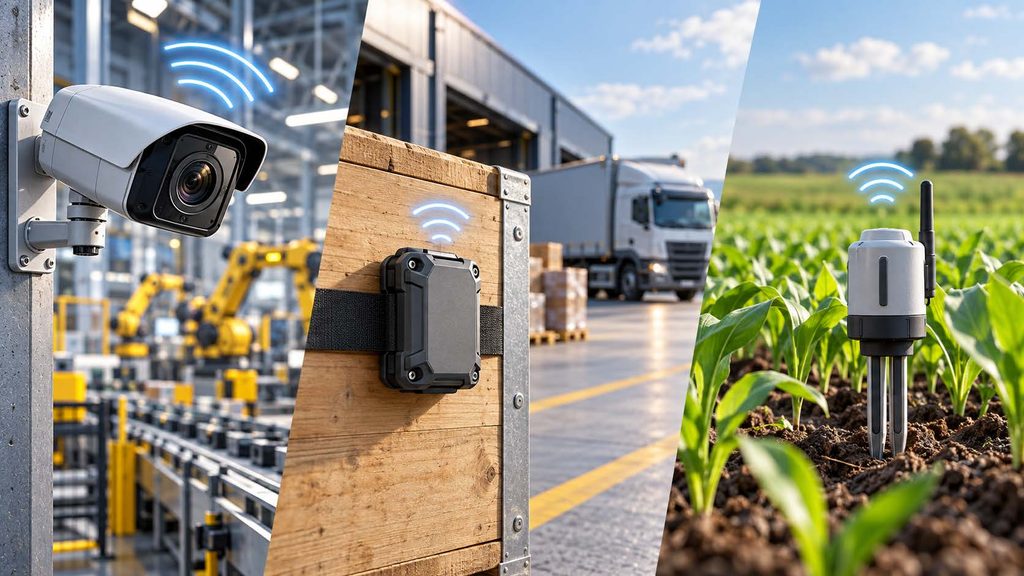
Security camera using 5G, Asset tracker using Cat-M, Soil monitor using NB-IoT

Not every IoT device/solution needs fast connectivity. In fact, most don’t. A soil-moisture sensor that sends a few bytes twice a day and a 4K security camera streaming around the clock live at opposite ends of the connectivity spectrum—and pairing either one with the wrong cellular technology means wasted battery, wasted money, or a device that simply can’t do its job.

Cellular IoT gives you three main options, each engineered for a different kind of device: 5G, LTE-M, and NB-IoT. Choosing well comes down to matching four things—data throughput, power consumption, latency, and mobility—to what your device actually does. Here’s how the three compare, and how to pick.

The Three Technologies at a Glance

5G is the high-performance tier: massive bandwidth, lower latency, and support for huge numbers of connected devices in dense areas. It’s built for data-hungry, real-time applications.

LTE-M (LTE Cat-M1) is a low-power wide-area (LPWA) technology tuned for IoT. It offers modest data speeds, solid coverage, good battery life, and—importantly—the ability to handle mobility. It’s the versatile middle ground.

NB-IoT (Narrowband IoT) is the ultra-low-power, ultra-low-bandwidth specialist. It sends small amounts of data infrequently, reaches deep indoors and underground, and can run for years on a single battery. It trades speed and mobility for reach and endurance.

Think of them as a spectrum: NB-IoT for tiny, patient, stationary sensors; LTE-M for mobile, responsive, moderate-data devices; and 5G for everything that needs real speed.

Factor 1: Data Throughput

Start with how much data your device moves.

If your device streams video, transfers large files, or pushes rich real-time telemetry, you need 5G (or at minimum LTE). Nothing in the LPWA tier can carry that load.

If your device sends moderate data—periodic images, firmware updates, or sensor batches —LTE-M is a strong fit. Its speeds (typically up to a few hundred kbps to low single-digit Mbps depending on category and network) cover a wide range of practical IoT jobs.

If your device sends tiny, infrequent messages—a meter reading, a status ping, a fill level—NB-IoT is purpose-built for it. Throughput is measured in tens of kbps, which is plenty for a payload the size of a text message, and inadequate for almost anything larger.

Rule of thumb: don’t overbuy bandwidth. A sensor that sends 50 bytes a day gains nothing from 5G and pays for it in cost and power.

Factor 2: Power Consumption and Battery Life

For battery-powered devices, power draw often decides everything.

NB-IoT is the endurance champion. Its power-saving features (PSM and eDRX) let a device sleep deeply between transmissions, stretching a single battery to 10 years or more in the right application. For devices installed somewhere you’ll rarely, if ever, revisit—buried water meters, remote environmental sensors—this is transformative.

LTE-M also supports the same power-saving modes and delivers excellent battery life, though its higher capability generally means somewhat more consumption than NB-IoT. For a mobile or moderate-data device that still needs to last years, it’s the sweet spot.

5G is the most power-hungry of the three by a wide margin. It’s designed for devices with reliable power or frequent charging—vehicles, gateways, cameras, industrial equipment—not for something meant to sip a coin cell for a decade.

Factor 3: Latency and Real-Time Response

How fast does your device need to react?

5G delivers ultra-low latency, which is essential for anything where split-second response matters: autonomous systems, remote control of machinery, real-time video analytics, or safety-critical automation.

LTE-M offers low-to-moderate latency—good enough for most interactive and near-real-time applications, like fleet telematics, alarms, or asset tracking that needs timely updates.

NB-IoT has higher latency and isn’t designed for real-time interaction at all. It’s built for “send data when there’s data to send,” where a delay of seconds—or intentionally much longer—is perfectly acceptable.

Factor 4: Mobility and Coverage

Where your device lives, and whether it moves, is the last major consideration.

Mobility: LTE-M handles movement well, maintaining connections as a device travels between cell towers—ideal for vehicles, wearables, and tracked assets. NB-IoT, by contrast, is optimized for stationary devices and handles handover between towers poorly, so it’s a weak choice for anything that moves. 5G supports mobility fully.

Deep coverage: NB-IoT’s narrowband signal penetrates exceptionally well into basements, tunnels, and dense buildings—places where other technologies struggle. If your device sits deep inside a structure or underground, NB-IoT’s reach is a genuine advantage.

Availability: 5G coverage continues to expand but isn’t universal, especially outside urban areas. LTE-M and NB-IoT availability varies by region and carrier. This is where a multi-network provider matters: coverage for any of these technologies depends heavily on which networks your SIM can actually reach.

A Simple Way to Decide

Match your device to the profile that fits:

  • Choose NB-IoT for stationary, battery-powered devices sending small amounts of data infrequently, especially in hard-to-reach indoor or underground locations. Think utility meters, environmental sensors, and smart-city infrastructure.
  • Choose LTE-M for mobile or moderate-data devices that need good battery life, timely response, or voice—like asset trackers, fleet telematics, wearables, and alarm panels. It’s the most versatile all-rounder.
  • Choose 5G for high-bandwidth, low-latency, powered applications: video, gateways, connected vehicles, robotics, and real-time industrial automation.

One more consideration for long-lived deployments: the older 2G and 3G networks that many legacy IoT devices relied on are being switched off worldwide. If you’re designing hardware today, building on LTE-M, NB-IoT, or 5G future-proofs it against those sunsets. Although, it should be noted that the future of NB-IoT may be dubious. Recently, we have seen major networks like AT&T end support for NB-IoT. This may be a step towards a new standard called 5G RedCap (Reduced Capacity).

Getting the Connectivity Right

The best connectivity choice isn’t the fastest or the newest—it’s the one that matches your device’s real workload. Overbuild and you waste battery and budget; underbuild and your device can’t perform. Weigh throughput, power, latency, and mobility against what your device genuinely needs, and the right technology stands out.

At OneSimCard IoT, IoT SIMs run across multiple networks and support LTE-M, NB-IoT, and broader 2G/3G, 4G LTE/5G connectivity, so you can deploy the right technology for each device and reach the widest possible coverage from a single platform. Start with what your device does—then let that decide the network.

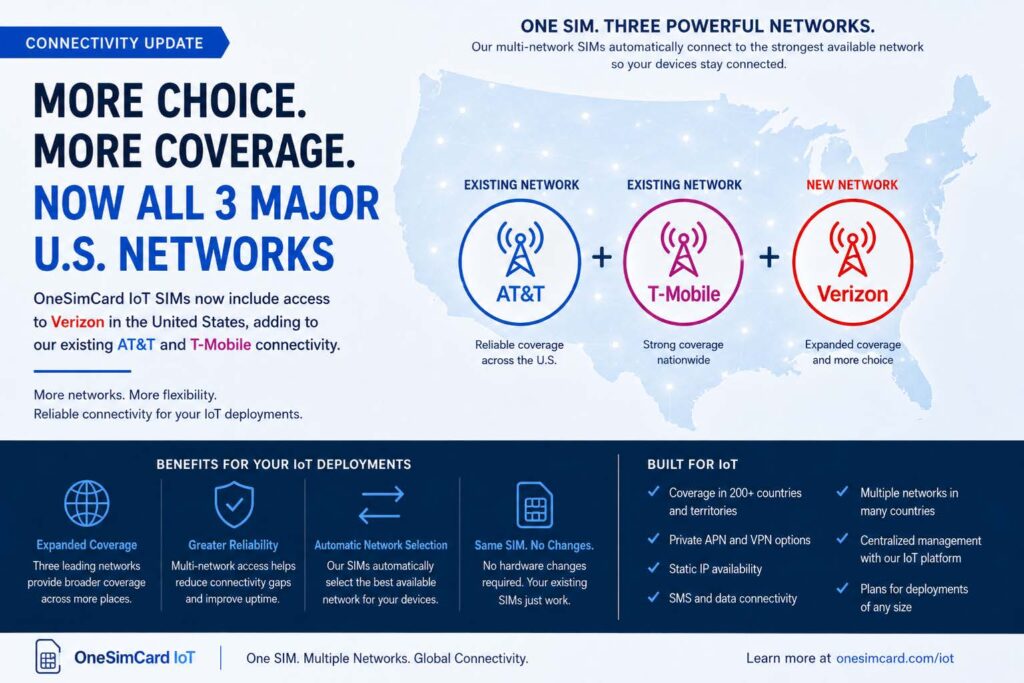
OneSimCard IoT Adds Verizon Access to Existing AT&T and T-Mobile U.S. Coverage

OneSimCard now supports all three major U. S. networks on one IoT SIM Card

Reliable connectivity is one of the most important parts of any successful IoT deployment. Whether a device is installed in an EV charging station, a GPS tracker, an alarm panel, a smart meter, a digital sign, or an industrial monitoring system, that device needs to stay connected wherever it operates.

OneSimCard IoT is pleased to announce an important expansion of our U.S. network coverage: Verizon access is now available on OneSimCard IoT SIM cards, adding to our existing AT&T and T-Mobile connectivity options in the United States.

This means OneSimCard IoT customers can now benefit from access to all three major U.S. mobile networks through a single IoT SIM solution.

More Network Choice for IoT Deployments

IoT devices are often deployed across different environments. Some are installed in dense urban areas. Others are placed along highways, in utility cabinets, inside buildings, at remote job sites, or in locations where network conditions can vary from one carrier to another.

Relying on only one network can create coverage limitations. A location that works well for one carrier may not perform as well for another. By adding Verizon access alongside AT&T and T-Mobile, OneSimCard IoT gives businesses more network flexibility for their connected devices.

This expanded coverage can help organizations reduce connectivity gaps, simplify deployments, and support more reliable device operation across a wider range of U.S. locations.

One SIM, Three Major U.S. Networks

The addition of Verizon access strengthens the value of the OneSimCard IoT multi-network approach. Instead of managing separate SIM cards, carrier contracts, and platform tools for different networks, businesses can use OneSimCard IoT SIMs to support multiple network options through one centralized solution.

For many IoT projects, this can help reduce complexity. A business deploying devices across multiple states, customer locations, or geographic regions may not always know in advance which network will perform best at every installation site.

With access to AT&T, T-Mobile, and Verizon, OneSimCard IoT SIMs provide more flexibility when devices are activated and deployed.

Designed for Real-World IoT Applications

The expanded U.S. network footprint is especially useful for IoT applications where uptime, coverage, and remote access matter.

Common use cases include:

  • EV charging stations
  • GPS tracking and fleet management
  • Security and alarm systems
  • Smart meters and utility monitoring
  • Industrial IoT equipment
  • Digital signage
  • Asset tracking
  • Healthcare and remote monitoring devices
  • Smart city infrastructure
  • Remote sensors and monitoring systems

In many of these applications, devices are installed and expected to operate with minimal on-site maintenance. When connectivity fails, the cost is not just a lost data session. It can mean truck rolls, service interruptions, customer complaints, or missing operational data.

Adding Verizon access gives IoT customers in the United States another important option for maintaining reliable connectivity in the field.

Greater Flexibility Without More Complexity

One of the key advantages of OneSimCard IoT is that customers can manage their SIMs through a centralized platform instead of juggling multiple carrier portals and account structures.

Through the OneSimCard IoT platform, customers can manage SIM activity, monitor usage, configure services, and support deployments across different regions and applications.

OneSimCard IoT SIMs also support important connectivity features for business and industrial deployments, including:

  • Data and SMS connectivity
  • Coverage in more than 200 countries and territories
  • Multiple network options in many countries
  • Private APN options
  • VPN connectivity
  • Static IP availability
  • Centralized SIM management
  • Flexible plans for deployments of different sizes

With Verizon now added to the U.S. network mix, customers gain broader network access while continuing to manage their IoT connectivity through a single provider.

Why Multi-Network IoT Connectivity Matters

IoT deployments are rarely confined to one perfect coverage area. Devices move, customers expand, installation sites change, and network conditions evolve over time.

A multi-network SIM gives businesses more room to adapt. For mobile applications such as fleet tracking, asset tracking, or connected transportation, network diversity can help devices stay connected as they move between different coverage areas.

For fixed-location devices, such as EV chargers, alarm panels, meters, kiosks, and digital signs, multi-network access can help businesses choose the strongest available network at the installation location.

The result is a more flexible IoT connectivity strategy that can scale across more devices, more locations, and more use cases.

Built for U.S. and Global IoT Growth

While the addition of Verizon access is an important update for U.S. deployments, OneSimCard IoT continues to support global IoT connectivity as well.

For companies operating across borders or planning international expansion, OneSimCard IoT provides coverage in more than 200 countries and territories. This makes it easier to manage domestic and international IoT deployments through one connectivity partner.

Whether your business is deploying 50 devices or scaling to thousands, OneSimCard IoT is designed to support long-term growth with flexible connectivity, centralized management, and multi-network access.

A Stronger U.S. IoT Coverage Option

The addition of Verizon access to existing AT&T and T-Mobile connectivity represents a major step forward for OneSimCard IoT customers in the United States.

With all three major U.S. networks now available, businesses can deploy IoT devices with greater confidence, broader coverage options, and less network-management complexity.

For organizations building, expanding, or optimizing IoT deployments, OneSimCard IoT now offers an even stronger connectivity solution for U.S. and global operations.

To learn more about OneSimCard IoT SIM cards, network coverage, Private APN, VPN, Static IP options, or SIM management tools, visit iot.onesimcard.com or contact the OneSimCard IoT team.

Simplifying Device Connectivity with One SIM for All IoT Needs

IoT SIM Card connecting many device types globally
One SIM Card Connecting Devices Globally

Imagine installing a connected device that works immediately, wherever it’s deployed. No adjustments, no downtime, no SIM swaps. This is now possible with one SIM for all IoT needs.

As businesses grow, managing connectivity across various networks, devices, and locations becomes more complex. Devices in transport, agriculture, retail, health, and manufacturing must remain connected to function effectively. Traditional SIM management struggles to meet this evolving demand.

The solution is a unified SIM strategy that simplifies connectivity, improves reliability, reduces costs, and enhances control. This guide explores how a single SIM for IoT can provide consistent, scalable, and smart connectivity.

The Problem with Fragmented SIM Management

Traditional SIM cards are usually tied to a single carrier. This creates several challenges:

  • Manual provisioning when moving devices
  • Inconsistent network performance by region
  • Complicated SIM lifecycle management
  • Contract limitations with specific providers

These problems delay deployment and create maintenance issues. Troubleshooting becomes harder when devices rely on different providers.

What Makes a Single SIM Solution Smarter?

A unified SIM for IoT operates independently of a single carrier. It supports multiple networks globally, either via eUICC (embedded Universal Integrated Circuit Card) or cloud-based provisioning. This allows devices to connect to the strongest network wherever they are automatically and securely.

With advanced SIM management platforms, these systems provide:

  • Real-time visibility over SIM usage, location and status
  • Remote provisioning and deactivation
  • API integrations for automation
  • Simplified billing and analytics

Comparing Legacy SIM Management vs One SIM for IoT

FeatureTraditional SIMsUnified SIM for IoT
Network AccessSingle carrierMulti-carrier, best available
ProvisioningManual and region-specificRemote, over-the-air
Deployment SpeedSlower, requires SIM swap for new marketsFaster, single SKU globally
Cost EfficiencyHigher OPEX due to roaming and SIM logisticsLower OPEX via smart switching and automation
SIM Lifecycle ManagementStatic and manualDynamic, automated and centralised
ScalabilityDifficult to manage in bulkDesigned for mass deployment
Downtime RiskHigh, due to network outages or incompatibilityLow, automatic failover to better networks

The Business Case: Why Switching Matters?

Let’s break down the tangible value that comes with implementing a unified SIM for IoT solutions:

1. Operational Agility

Fewer moving parts mean fewer delays. Businesses can ship devices pre-provisioned and ready for immediate deployment, regardless of geography. This is particularly valuable for industries like logistics, where devices may travel cross-continent.

2. Lower Total Cost of Ownership

Costs aren’t just about SIM cards. Think shipping delays, reconfiguration time, customer support queries, and data loss during network outages. A single-SIM model significantly reduces such hidden expenses.

3. Real-Time Insights

Modern SIM management platforms offer dashboards that visualize network performance, usage spikes, and even detect faulty devices, giving businesses a level of control that was simply not possible with static SIMs.

4. Security & Compliance

Many unified SIM providers offer advanced encryption, device authentication, and local data residency compliance. This matters more than ever in sectors like telehealth or smart cities.

Industry-Specific Case Studies

●     Healthcare Connectivity at Scale

Medical devices require uninterrupted data transmission for patient monitoring and diagnostics. Using a single SIM for IoT, healthcare providers can remotely update firmware, maintain uptime in critical care equipment, and ensure data compliance through secure encrypted channels. The ability to instantly adapt to the strongest available network saves lives and reduces risks in patient care.

●     Energy and Utilities Transformation

Smart meters and grid sensors are often installed in rural or hard-to-reach environments. Traditional SIMs struggle with weak signals or network incompatibilities. A unified sim for IoT ensures these devices remain online, capturing accurate data and improving service delivery. Energy companies have reported reduced truck rolls and faster issue resolution through automated SIM management.

Selecting the Right Platform

Choose a provider based on these attributes:

AttributeBasic ProviderGlobal IoT ProviderUCloud-Based Platform
Network FlexibilityFixed networkMulti-networkAdaptive multi-network
SIM ProvisioningManual setupRegion-specific preloadingOver-the-air dynamic setup
Usage MonitoringMinimalBasic dashboardReal-time insights
IntegrationLowModerateAPI-enabled automation
ScalabilityLimitedModerateHigh
SecurityBasicStandardAdvanced

Questions to ask yourself:

  • Can the SIMs switch between networks automatically?
  • Does the platform support central SIM management?
  • Are APIs available for workflow integration?
  • What technical support is provided?
  • Is pricing flexible for scaling?

Real-World Impact

A smart sensor deployment experienced drops in connectivity, roaming charges, and delayed support. Initially using multiple SIMs, they faced high costs and reconfiguration delays.

Switching to a unified SIM improved connectivity immediately. Devices auto-selected the best network. Visibility increased, setup time halved, and support requests declined. Uptime exceeded 99 percent.

What Makes a Unified SIM So Smart?

  • No SIM swaps
  • Free up your team for new work
  • Link with new networks (like 5G)

At its core, a unified SIM, sometimes called a global SIM or eUICC, isn’t locked into a single network. Instead, it dynamically connects to the strongest available network in any location, automatically and securely. This is possible through:

  • Multi-network support with over-the-air (OTA) updates
  • eUICC technology, which allows SIM profiles to be remotely managed or swapped
  • Cloud-based provisioning, meaning no more physical SIM changes

You also get access to platforms that offer real-time data on usage, device status, and more, all from one dashboard.

Sounds like magic? It’s not. It’s simply smart engineering combined with automation.

Future of Connectivity: 5G, NB-IoT and Beyond

With the rise of 5G and NB-IoT (although it seems some networks are sunsetting NB-IoT support), the field of device connectivity is changing fast. A new sim for IoT must back new tech while still working with old ones and being ready for what’s next. From self-driven cars to factory bots, future-proof SIMs help firms stay ahead as new networks and rules come up.

Make Your IoT Network Seamless with Fixed Addresses and Special SIM Cards

OneSIM Card Connecting fixed IP addresses

Imagine you have lots and lots of smart devices. Think of tiny sensors everywhere. Think of machines talking to each other. It can get messy fast, right? Keeping track of them all can feel like trying to catch smoke. You want to know what is going on. You want to be able to tell them what to do. This is for businesses that want to be in charge. They want to see everything clearly.

This blog is for you. We will talk about two cool tools. When you use them together, things get much simpler. You get a clear view. You can tell your gadgets what to do easily. Let us see how fixed, Static IP addresses and special NB IoT SIM cards can make your smart devices work better for you. Let us get you back in control.

What Is NB IoT and Why Is It Great?

NB IoT is a fancy name. But it is just a way for small amounts of data to travel wirelessly. Think tiny updates from a sensor. Think simple on or off commands. It does not use much power at all. This is great! Your devices can run for a long time on one battery. This means you do not have to change batteries all the time. It also means you can put devices in remote places.

So, NB IoT sim card is a great idea. It uses little power. It reaches far. It does not cost a lot. For many smart devices, this is perfect. You can have lots of them without spending a fortune. You can get data from places you could not before. Your devices sip power, they do not gulp it down. This makes a strong base for all your smart plans.

Why Fixed Addresses Are Great for Smart Devices?

Now, let us talk about where things live online. Every Device on a network has an IP address. It is like your home address, but for the internet. Most of the time, these IP addresses change. They are like a new temporary address each time your device connects. This is okay for your phone. But for smart devices, it may not be optimal.

Basically, fixed IP addresses bring order to the internet addresses of your devices. For smart networks, this means easier access, better safety, and simpler management. It gives you a solid base to build on.

When Fixed Addresses Meet Special SIM Cards – It’s a Perfect Match!

Now, here is where things get really good. Think of NB IoT as the reliable way your devices talk to the internet. Think of fixed IP addresses as giving each device its own permanent name and online spot.

Because NB IoT uses so little power, your devices in remote places can stay online for years. Because they have a fixed IP address, you can always find them. You do not have to worry about their address changing when they wake up to send info. This makes checking on things remotely super reliable.

NB IoT sim card gives you a reliable, long-distance connection. Fixed addresses give you the stable, always-there online “location”. Together, they make your smart device network strong, safe, and easy to manage. It is a combination that just makes sense for many businesses.

Real Benefits You Can Actually See

Talking about tech is one thing. But what does it actually do for your business? Let us look at some real wins.

Things become more reliable. With fixed IP addresses, your connection to your devices is more stable. You are not chasing moving targets online. The info flows more smoothly. You can trust that your remote commands will get through. This constant connection is super important for many businesses that need to watch things all the time.

Maintenance becomes easier too. When you can connect to and troubleshoot devices from your office thanks to fixed IP addresses, you spend less time and money on physical check-ups. You can often update software and change settings remotely, saving you valuable resources.

These are not just fancy ideas. These are real, measurable benefits that businesses are seeing right now. Things work better, it is easier to grow, you can see everything remotely, and you save a lot of money. These are the kinds of results that help your business do better and stay ahead.

Conclusion:

We have looked at the basics. We have seen how an NB-IoT sim card is a great way for your devices to connect without using much power. We have learned how fixed IP addresses give each device a permanent and easy-to-find address online. And we have seen how using them together is a powerful combination for your smart device needs.

Think about feeling in control. Think about knowing your network is solid and safe. Think about how easy it will be to manage lots of devices without constant problems. This is what upgrading offers you. It is not just about better technology. It is about having peace of mind. It is about being in charge of your online operations. It is about getting the most out of your smart devices.

Try our SIM cards with fixed IP addresses for NB-IoT, and make your device deployment the best it can be.

Understanding IoT SIM Card ICCIDs: What They Are and How They Work

Introduction

The Internet of Things (IoT) has revolutionized industries by enabling seamless communication between devices. At the core of this connectivity are SIM (Subscriber Identity Module) cards, which allow IoT devices to connect to cellular networks. Each IoT SIM card comes with a unique ICCID (Integrated Circuit Card Identifier)—a critical component for managing and identifying SIM cards across global networks.

In this blog, we’ll explore what an ICCID is, how it is created, and what the numbers in an ICCID mean. Understanding ICCIDs is crucial for businesses deploying IoT solutions, as they help in managing large fleets of connected devices.


What is an IoT SIM Card ICCID?

An ICCID (Integrated Circuit Card Identifier) is a unique number assigned to every SIM card, including those used in IoT devices. This identifier plays a vital role in distinguishing SIM cards across different networks and regions. Unlike the IMSI (International Mobile Subscriber Identity), which identifies the subscriber, the ICCID is linked to the physical SIM card itself.

The ICCID is embedded in the SIM card during manufacturing and is stored in its memory. It is also printed on the SIM card body so that network operators and users can easily reference it. The ICCID follows a standardized format defined by the International Telecommunication Union (ITU-T) in the E.118 recommendation.

IoT SIM cards, which are often used in smart meters, connected vehicles, industrial sensors, and other machine-to-machine (M2M) applications, rely on ICCIDs for inventory management, provisioning, and network authentication.


How are ICCIDs Created?

ICCID numbers are generated following a specific international standard to ensure uniqueness and consistency across the global telecom ecosystem. The structure of an ICCID adheres to the ISO/IEC 7812 numbering system, which is also used for bank card numbers.

Here’s the process of how ICCIDs are created:

  1. Assignment of the Issuer Identification Number (IIN):
    • The first few digits of the ICCID are assigned to the telecom provider or SIM card issuer.
    • This ensures that no two operators generate conflicting ICCIDs.
  2. Encoding of the Unique Account Number:
    • The SIM card manufacturer assigns a unique serial number to each SIM card.
    • This number helps in tracking and differentiating SIMs produced in the same batch.
  3. Incorporation of a Checksum Digit:
    • To ensure the validity of the ICCID, a Luhn algorithm is applied to generate the final check digit.
    • This helps in detecting errors in the ICCID when it is entered manually or scanned.

Once generated, the ICCID is permanently stored on the SIM card and cannot be changed.


Breaking Down the ICCID Number

An ICCID is typically 19 to 20 digits long and follows a structured format:

Example ICCID:
89 12 3456 7890 123456 7

Each part of the ICCID has a specific meaning:

  1. Industry Identifier (2 digits) – “89”
    • The first two digits always start with “89”, which indicates that the card is used for telecommunications.
    • This is a globally standardized prefix.
  2. Country Code (1–3 digits) – “12”
    • The next set of numbers represents the country code, assigned by the International Telecommunication Union (ITU).
    • It helps identify the country where the SIM card was issued.
  3. Issuer Identification Number (IIN) – “3456”
    • This segment identifies the mobile network operator (MNO) or SIM card issuer.
    • Different telecom providers have unique IINs.
  4. Unique SIM Card Serial Number – “7890 123456”
    • This is a manufacturer-assigned unique number for each SIM card.
    • It ensures that no two SIM cards have the same ICCID.
  5. Checksum Digit – “7”
    • The last digit is a mathematically calculated check digit using the Luhn algorithm.
    • This helps prevent errors when entering the ICCID manually.

Why are ICCIDs Important for IoT?

ICCID numbers play a crucial role in IoT deployments. Here’s why they matter:

1. Device Authentication & Security

  • Networks use ICCIDs to authenticate and register IoT SIM cards, ensuring that only authorized devices connect to the network.

2. Remote SIM Management

  • With large-scale IoT deployments, companies use ICCIDs to track and manage SIMs remotely through SIM management platforms.

3. Network Provisioning & Roaming

  • ICCIDs help in identifying SIMs that are configured for specific network access, including multi-network and global roaming IoT SIMs.

4. Troubleshooting & Customer Support

  • If an IoT device experiences connectivity issues, network operators can use the ICCID to diagnose and resolve problems.

5. Compliance & Inventory Tracking

  • Businesses with thousands or millions of IoT SIMs use ICCIDs to ensure compliance with telecom regulations and keep accurate inventory records.

ICCID vs. IMSI vs. IMEI: What’s the Difference?

While ICCID, IMSI, and IMEI are all used in telecom networks, they serve different purposes:

IdentifierStands forPurposeAssigned toCan Change?
ICCIDIntegrated Circuit Card IdentifierIdentifies the physical SIM cardSIM CardNo
IMSIInternational Mobile Subscriber IdentityIdentifies the mobile subscriberLinked to a SIM profileYes (with eSIMs)
IMEIInternational Mobile Equipment IdentityIdentifies the device hardwareDevice (e.g., phone, IoT module)No

For IoT applications, ICCID is crucial for managing SIM inventory, while IMSI is essential for network authentication, and IMEI helps in tracking devices.


Conclusion

ICCID numbers are an essential part of IoT SIM cards, enabling seamless connectivity and efficient SIM management. By understanding their structure, creation process, and significance, businesses deploying IoT solutions can better manage their SIM inventories and ensure secure, reliable network connections.

As IoT adoption continues to grow, ICCIDs will remain a key component in identifying and authenticating millions of connected devices worldwide. Whether you’re managing a fleet of smart meters, connected vehicles, or industrial sensors, keeping track of ICCIDs ensures a smooth and secure IoT deployment.


Want to learn more about IoT connectivity and SIM management? Contact us HERE, & stay tuned for more insights on optimizing your IoT deployments! 🚀

The OneSimCard IoT Track SIM: A Game-Changer for Consumer IoT Connectivity

OneSimCard IoT Track SIM card for consumers

Introduction

In today’s hyper-connected world, the demand for reliable and cost-effective connectivity solutions is higher than ever. Whether it’s for personal security, asset tracking, smart home devices, or mobile applications, consumers need a SIM card that can support their Internet of Things (IoT) devices seamlessly. The OneSimCard IoT Track SIM emerges as a leading choice, offering global coverage, affordability, and robust functionality tailored for IoT applications.

What Is the OneSimCard IoT Track SIM?

The OneSimCard IoT Track SIM is a specialized SIM card designed for IoT applications, particularly in the realm of asset tracking, vehicle monitoring, security systems, and smart devices. Unlike traditional SIM cards, which cater primarily to voice and data needs, the IoT Track SIM focuses on low-power, high-efficiency communication that ensures devices stay connected over long distances and across multiple networks worldwide without the worries of non-permanent roaming.

Key Features of the OneSimCard IoT Track SIM

1. Global Connectivity

One of the biggest advantages of the IoT Track SIM is its global coverage. The SIM operates in over 200 countries and territories and automatically connects to the best available network, ensuring seamless connectivity wherever your IoT device is used. This feature is especially useful for those who use GPS trackers, fleet management systems, or personal safety devices that require constant, consistent & reliable coverage.

2. Affordable and Flexible Pricing

Unlike traditional mobile plans that can be costly and inflexible, the OneSimCard IoT Track SIM offers affordable plans for any use case. Rates start at $3.60 for 300MB for 90 days. There are plans available per country, region, or up to 130 country plans.

3. Multi-Network Access

The IoT Track SIM is designed to connect to multiple networks within a country, reducing the chances of signal loss or poor reception. If one network is unavailable or weak, the SIM automatically switches to another carrier, ensuring a stable connection for IoT applications such as vehicle tracking or security monitoring.

4. Low Power Consumption

IoT devices often operate on battery power for extended periods. The IoT Track SIM is optimized for low power consumption, ensuring that devices such as GPS trackers or environmental sensors remain operational for longer durations without frequent recharging or battery replacement.

5. Enhanced Security

Security is a major concern when it comes to IoT connectivity. The OneSimCard IoT Track SIM provides secure and encrypted data transmission, protecting sensitive information from cyber threats and unauthorized access.

Who Can Benefit from the OneSimCard IoT Track SIM?

The versatility of the IoT Track SIM makes it an excellent choice for various consumer applications:

  • GPS Trackers: Ideal for personal, lost luggage trackers, and vehicle tracking solutions.
  • Smart Home Devices: Ensures connectivity for security cameras, alarm systems, and remote monitoring tools.
  • Wearable Tech: Supports fitness trackers and personal safety devices.
  • Pet Tracking: Helps keep tabs on pets with GPS-enabled collars.
  • Remote Monitoring: Useful for agricultural sensors, weather stations, and other IoT devices requiring constant data transmission.

Conclusion

The OneSimCard IoT Track SIM is a powerful and flexible connectivity solution for consumers looking to stay connected globally without breaking the bank. With its wide coverage, low-cost plans, multi-network access, and robust security, it stands out as one of the best IoT SIM cards for personal and professional use. Whether you need it for tracking, security, or smart devices, this SIM card ensures reliable performance and peace of mind in an increasingly connected world. Full details available here: https://iot.onesimcard.com/iottrack/

New Features Added to M2M SIM Card OSCAR Platform

New SIM Search Filter Added for SIMs with IMEI Lock

An M2M Sim card client requested to search for all M2M SIM cards with the IMEI lock enabled. With this update, M2M SIM cards with the IMEI lock engaged are now quickly identified. Many devices can be changed because the M2M SIM cards with the lock can be unlocked. This was particularity important for this client moving IoT SIMs from older 3G devices to their new 4G devices. Once the SIMs that had the lock were identified there is now a new bulk operation to remove the IMEI lock.

imei lock filter.jpg
M2M SIM card filter list


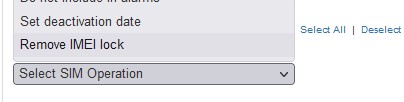
New Bulk Operation Added to Remove IMEI Lock

In concert with the above IoT Sim card filter, we added a new bulk operation to remove IMEI locks on many SIMs at once. This additional functionality makes the process of SIM card IMEI locks much faster because the administrator no longer has to go in the the SIM settings for each SIM to remove the lock. If you have thousands of M2M SIM cards, this was very time consuming. An administrator can now perform this function to many M2M SIM cards at once.

Bulk operations for M2M SIM card

Contact Us!

We welcome feedback! If you have any feedback on our IoT SIM card OSCAR Platform, please send us a note. You can reach us at feeback@onesimcard.com.

If you would like to speak with one of our M2M SIM Card experts, please reach out to us at Sales@onesimcard.com. You can also submit a custom quote request on our site. We will develop a solution specific to your requirements.

2 Updates to the OSCAR IoT SIM Management Portal

New API Command Available for Updating User Name and Device Fields

We added a new API command for both Pooled and PAYG accounts This command will allow you to update the User Name and Device fields for your IoT SIM Cards in the OSCAR portal. This is especially useful when you are using your own portal to activate IoT SIMs & include the User Name (nickname). The User Name & Device Type are now populated to our OSCAR portal automatically through API. Before now, these fields could only  be updated on the Portal in separate tabs. Automating this process is a great time-saver!

New Feature in the OSCAR Portal Allows for Updating/Making Changes to up to 200 SIMs at a Time

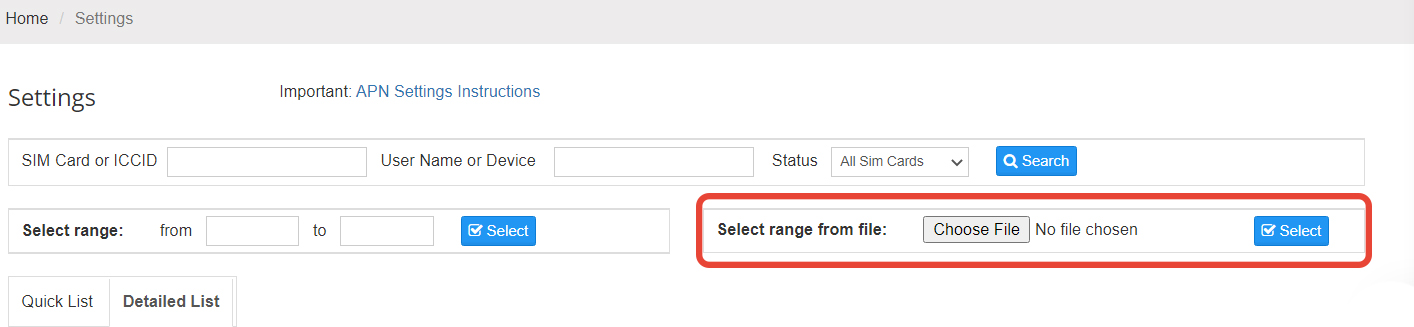
Before this update, the maximum number of SIMs that can be displayed on the SIM card page was 100. You could select up to all 100 and perform a bulk operation on these SIMs.  Also, these SIMs had to be in certain logical order (sorted by SIM #, ICCID, Status, etc.). If you wanted to work on SIM cards that were not consecutive in this logical order, or only some of those SIMs but not all, you needed to select (or deselect) only those which you want to work on. Last month, we added functionality to upload a CSV file into the portal with the SIM card numbers on which you want to work. You will see this file upload option at the top of the SIM card page. This upload tool allows you to load a CSV file with up to 200 SIM cards at a time. Now you can work on more SIMs at once, and choose the SIMs you on which you want to work based on the file you uploaded (maybe it was a report you ran, etc.).

If you have any questions on these new functions or any other questions on the OSCAR IoT SIM card management portal, please reach out to our IoT experts at Sales@OneSimCard.com.

When Is the Optimal Time to Engage with, and Decide on, a SIM Connectivity Provider for Your IoT Project?

When starting a new IoT project, there are many pieces of the puzzle to put together. You want to ensure on-time delivery of the project and you need to make sure that all of the bugs have been worked out during the testing project. Many IoT projects fail to deliver on-time because they put off testing with their chosen IoT SIM card providers until the very end. This causes loss of revenue, an unhappy end customer because the delivery time is not delivered on time (which can cause penalties or loss of confidence and the end-customer decides to cancel their order and choose another solution), and bad reviews for your company.

The most successful project engages with, and choose, an IoT SIM card provider in the initial stages of project design. There are many factors that go into the decision process for a SIM card provider. Some of the factors include:

  • Coverage – Does your provider have a robust network to ensure the IoT SIM card will work where you need it to work? Are your needs in one country or are you looking to deploy your IoT SIM cards international? Whether it is Domestic or International deployment, is the provider able to provide coverage on multiple networks (for redundancy) without “Steering” your traffic. Can they provide this service using a single APN & with a single management portal?

  • Functionality – Does your IoT SIM card provider offer all of the functionality you require? Typical functionality can include:

    • Portal for SIM Management – It is critical that you have access to maintain your fleet of SIMs. The IoT SIM card management portal is used to

        •  activate & deactivate SIMs;

        • analyze data consumption;

        • gain an understanding of where data is being consumed;

        • put limits on usage;

        • provide access for multiple users & profiles allowing access to specific functionality and/or specific SIM cards – even provide access to the end customer in cases of B2B2X scenarios;

        • Send SMS through the portal;

      • Batch operations;

      • Etc.

    • Dynamic and Static IP Addresses – Most IoT SIM card providers default to Dynamic IP addresses. If you require Static IP’s, do you need Public or Private Static IP addresses? The more secure option is Private IP addresses. Private static IP’s require that the device communicating with the SIM card be on the same IP range – this is commonly called Peer-to-Peer connectivity. Public static IP’s can be addressed from any device on the Internet which is why Public Static IP’s offer no security.

    •  VPN Service – Open VPN or IPSec? Open VPN is typically a less expensive solution but it limits tunnel to one user concurrently per VPN. This can be a user’s PC or Laptop, or a server where multiple users can access from within you LAN, but only one at a time. IPSec VPN tends to be a more expensive solution and allows multiple concurrent users and is chosen when a team needs access. Both Open and IPSec require Static IP’s for the IoT SIMs.

    • Private APN – APN’s (Access Point Name) are required on all SIM cards because it provides a point of entry into the IP network. Typically IoT SIM card providers give all of their customers a shared APN. Private APN’s are given to clients because they want simple and secure access to all of their devices. Clients sometimes use multiple APNs because they want one APN to provide service with different security levels. For example, one APN can be used to connect to the public internet while the second APN can be used to transmit sensitive data (like credit card transactions) via VPN using a private network.

    • IMEI Lock – The IMEI lock ensures the SIM will only be used and a particular device. Without the Lock, it is possible to remove the SIM and insert into another device (like a phone or tablet) and run up data consumption.

    • Whitelist IP’s and/or URLs – Sometimes there is a requirement to provide data connectivity access to and from a handful of addresses and not allow any access outside of this narrow list.

    • Limit Data or Money Usage – Limiting usage on IoT SIM cards is extremely important when in testing & in production. You want to limit your financial impact when there is a device that “goes rogue” and starts using an inordinate amount of data This is particularity important when in the testing phase because the chances that there is a bug in the device is much higher – that’s why you test. This can happen in production as well, so you want to look into these limits. In pooled data plans limits should be put into place for how much data is allowed in a given time period. In prepaid plans, there needs to be a limit for how much money an IoT SIM card can spend in a given time period?

    • Voice, SMS and Data – What are the requirements for your project? Are you just looking for Data access or do need access to voice and/or SMS also? Voice is typically used in wearable device projects such as child or elderly care (think about trackers with a “panic button” for dialing caregivers). It can also be important in the medical tech industry as well for tele-medicine as an example. SMS is typically used to send commands to the remote device and receive confirmations of those commands back from the remote device. There are many other uses for SMS, but sending commands to the IoT SIM card is by far the most popular use case.

    • Multi-IMSI Support – Multi-IMSI support allows the IoT SIM card to change which HLR (Home Locator Register) to use. The ability to allow changing IMSI’s is important to provide the best network access. The device in the field will need to have a SIM toolkit in order to enable OTA (over the air) IMSI changes. Multi-IMSI support provides peace of mind that if the current HLR doesn’t allow International Roaming for that country, that another HLR can be written to the card.

    • No “Steering” – Network Steering is the method providers utilize to keep your traffic on a particular mobile network. Providers do this to ensure your traffic stays on the least expensive network for the provider. Domestic (often referred to as Native) SIM cards typically steer traffic to their network first and keep the connection on their network until there is no signal before allowing the IoT SIM card to roam onto another network. This may make sense for the provider, but it does the customer a disservice by causing connectivity issues (the connection may bounce between networks) and connection speed problems. Steering isn’t limited to Native carriers. International IoT Sim card providers may also Steer traffic when roaming to ensure the least expensive network is connected. Look for a provider that does NOT steer traffic.

    • API functionality – Do you want the ability to access the IoT SIM card provider’s portal using API’s? Is the provider able to add API’s specific to your specific needs quickly? Many customers need to perform IoT SIM management through their portals instead of through the SIM card provider’s portal. An example of this might be a scenario where you are providing a GPS solution. You have all of your IoT SIM cards installed in your inventory of devices, but the SIM card is not activated. When you sell a GPS device to your customer, they will activate that service through your portal. Your portal is connected to your IoT connectivity provider via API and send a command to the provider’s portal to activate data service on the installed SIM card. API integration is a “must have” for many IoT projects, especially in larger deployments or when there is a high number of small transactions required.

  • Flexibility – Does the provider partner with you and listen to your particular requirements. Is the IoT SIM card provider able to design a solution that is custom to your project’s needs or are they requiring you to design your needs to fit their “cookie cutter” solution? While some projects are fairly straightforward, most IoT projects are better served by custom plans for that particular need.

  • Form Factor – What type of IoT SIM card do you need? Are you designing for an embedded SIM (Mff2) or a tradition SIM (2FF, 3FF or 4FF)? More and more projects are moving to embedded SIMs but adoption still lags behind industry predictions. Embedded SIMs provide more flexibility and allow devices to become smaller because of the amount of real estate that traditional SIMs require. Also, is there a need for industrial SIMs which have a higher tolerance to temperature (high and low) fluctuations.

  • Customer Support – If you contact your IoT SIM card provider, do they answer your call and reply to your emails? If there is a problem with connectivity, will they help troubleshoot? Is there a team assigned to your account to ensure success? Are they willing to roll up their sleeves and help you with design?

  • Cost – There is a reason this is the last consideration when choosing an IoT SIM card partner. If your project’s requirements from the above are not met, then cost doesn’t matter; even a no cost solution that doesn’t meet your needs costs too much. Too often, cost is too heavily weighted without understanding how the above criteria are satisfied. It’s not to say that cost is unimportant but if you choose the least expensive solution and you spend a lot of development cycles trying to make it work you will end up spending more money on something that ends up not working.

To summarize, you want to partner with an IoT SIM card provider very early in your design process. You need to understand your particular needs and ensure that the chosen SIM card connectivity provider has the experience with similar projects and can meet YOUR particular requirements.

OneSimCard IoT has a team of IoT connectivity experts who are always curious about, and willing to engage with your particular project. We design our global IoT SIM card solutions to your needs and never try to put a square peg in a round hole because we understand every project is different. If you are looking for a connectivity solution, please contact sales@onesimcard.com for a no obligation consultation.